
When a customer reviews the specifications of a networking device, they see dry figures: bandwidth, number of ports, supported protocols, operating temperature range. But behind each of these parameters lies a long history of research, experiments, and refinements. Reliability doesn't happen by chance — it is built through many months of focused work.
At MORION NETWORKS, we don't leave things to chance. Every new model undergoes a rigorous testing cycle: first in the lab, then under artificially generated load, and finally in a live network. The entire process takes about six months, and only upon its completion do we decide whether the equipment is ready for commercial deployment.
At MORION NETWORKS, we don't leave things to chance. Every new model undergoes a rigorous testing cycle: first in the lab, then under artificially generated load, and finally in a live network. The entire process takes about six months, and only upon its completion do we decide whether the equipment is ready for commercial deployment.
Three Stages of Validation: From Function to Real-World Network
The testing process consists of three sequential stages:
Each answers a specific question: Does the advertised functionality work? How does the device behave under sustained real-world operation? Skipping stages is not an option — lab validation does not replace load testing, and success in load tests does not guarantee fault-free performance in the field.
- Functional testing
- Load testing
- Field testing
Each answers a specific question: Does the advertised functionality work? How does the device behave under sustained real-world operation? Skipping stages is not an option — lab validation does not replace load testing, and success in load tests does not guarantee fault-free performance in the field.
Stage 1. Functional Verification of All Capabilities
In the first stage, we verify that the device meets its own specifications. Engineers take a new sample and methodically, step by step, test all the modes and functions claimed by the manufacturer and required by the customer. The test methodology is based on real-world scenarios typical of carrier and enterprise networks.
The scope of testing depends on the equipment class:
Duration of this stage: about one month.
The scope of testing depends on the equipment class:
- For access switches, perimeter security and traffic policing accuracy are critical. At this level, we get the first answer: can the device correctly handle DHCP Option 82 support and ensure fast convergence on edge ports?
- For aggregation switches, the requirements are significantly broader: the equipment must withstand peak loads, ensure seamless failover, and remain manageable under control-plane attacks.
- For data center switches, the requirements are even more stringent: the equipment must align with the specific demands of data center infrastructure and ensure stable operation under complex networking scenarios.
- A separate focus is OLTs. For them, interoperability is key: the equipment must correctly interact with ONTs from different vendors. It is at this stage that we get the first objective answer: does the device meet its claimed specifications?
Duration of this stage: about one month.
Stage 2. Load Testing in a Controlled Environment
Once it becomes clear that all functions work, the next question arises: what happens when the equipment faces real traffic, peak loads, and abnormal situations?
In production, ideal conditions are rare. So in the second stage, we create an artificial environment that closely mimics real-world conditions. We push data streams, simulate port congestion, and test buffer behavior and queue management algorithms.
In production, ideal conditions are rare. So in the second stage, we create an artificial environment that closely mimics real-world conditions. We push data streams, simulate port congestion, and test buffer behavior and queue management algorithms.
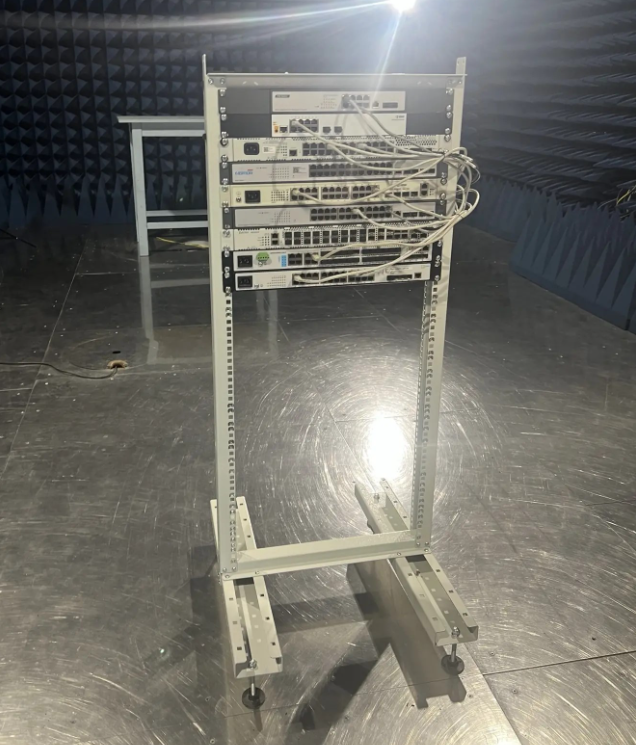
We have not only traffic generators but also additional test equipment at our disposal. This includes climate chambers that allow us to verify stability across a temperature range from –60 to +85 °C, as well as setups for evaluating electromagnetic immunity.
The point of this stage is simple: the device must not just function — it must do so predictably and stably under high loads. Any detected deviation becomes a signal for in-depth analysis. If the issue is confirmed, the materials are passed to the development team for refinement.
Duration of this stage: about two weeks.
The point of this stage is simple: the device must not just function — it must do so predictably and stably under high loads. Any detected deviation becomes a signal for in-depth analysis. If the issue is confirmed, the materials are passed to the development team for refinement.
Duration of this stage: about two weeks.
Stage 3. The Test of Time and Real-World Conditions
Lab environments allow us to test many scenarios, but none can fully replicate a live telecommunications network with all its unpredictability. That's why the final stage is field testing.
The equipment sample is installed at an active site, configured for real-world tasks, and left in operation for an extended period. We organize continuous monitoring of its status, but the device itself is no longer under lab control.
The equipment sample is installed at an active site, configured for real-world tasks, and left in operation for an extended period. We organize continuous monitoring of its status, but the device itself is no longer under lab control.
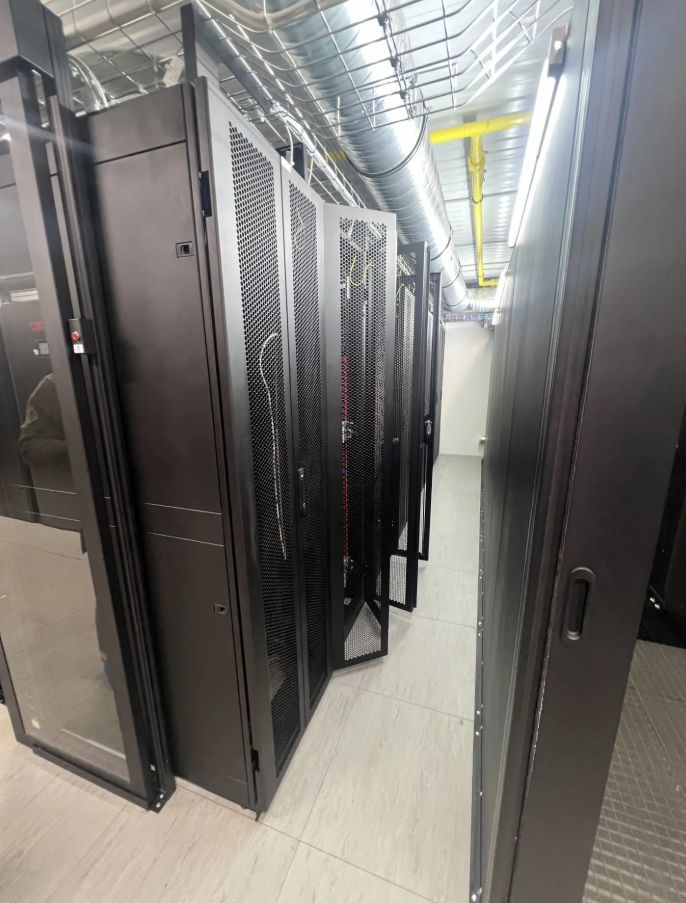
The equipment operates in a real infrastructure, facing actual traffic loads, seasonal temperature fluctuations, power surges, and network incidents. If any deviation from the norm occurs, we try to understand: is this an isolated incident or a sign of a systemic issue? If the failure recurs and is confirmed, the information is thoroughly documented, analyzed, and passed to the developers for correction.
This is why the field stage takes the longest — from two to four months, depending on the equipment type.
This is why the field stage takes the longest — from two to four months, depending on the equipment type.
From Testing to Practical Interoperability
The results of this approach are clearly visible with OLTs. Interoperability testing with terminals from different manufacturers gives operators real freedom: they can build networks using a wide range of subscriber equipment rather than being locked into a single ecosystem.
Compatibility is not just a line in a spec sheet. It's a fact confirmed by numerous tests. And the broader that testing base, the greater the flexibility for network design.
Compatibility is not just a line in a spec sheet. It's a fact confirmed by numerous tests. And the broader that testing base, the greater the flexibility for network design.
When Development Is Just a Conversation Away
There is an important factor that doesn't show up in numbers. At MORION NETWORKS, the development team works side by side with test engineers. This creates a short feedback loop.
If an issue is found at any stage, there's no need to go through a long chain of approvals with a remote office. We can go directly to our development colleagues, jointly diagnose the root cause, and implement fixes quickly. For complex networking equipment, the speed of this communication is critical.
Testing ceases to be the final step and becomes part of a continuous cycle: development → testing → analysis → refinement.
If an issue is found at any stage, there's no need to go through a long chain of approvals with a remote office. We can go directly to our development colleagues, jointly diagnose the root cause, and implement fixes quickly. For complex networking equipment, the speed of this communication is critical.
Testing ceases to be the final step and becomes part of a continuous cycle: development → testing → analysis → refinement.
What Happens After Testing?
The process doesn't end with product release. Every new project brings additional experience, allowing us to refine our methodologies and expand the range of test scenarios. This is how our engineering knowledge base is built — with each cycle, it grows deeper, and our methods become more precise.
That is the purpose of multi-stage validation. Reliability is built through months of testing, meticulous engineering work, analysis of every deviation, and the developers' readiness to respond quickly to results.
For the customer, however, it should all look simple: the equipment is deployed and just works. And behind that simplicity lies a long, painstaking effort that stays out of the spotlight.
MORION NETWORKS — equipment that passes the test before it hits the network.
That is the purpose of multi-stage validation. Reliability is built through months of testing, meticulous engineering work, analysis of every deviation, and the developers' readiness to respond quickly to results.
For the customer, however, it should all look simple: the equipment is deployed and just works. And behind that simplicity lies a long, painstaking effort that stays out of the spotlight.
MORION NETWORKS — equipment that passes the test before it hits the network.